
Birds of a Feather: Getting to Know Mobile Loaves & Fishes
Each newsletter, we’ll spotlight a different group out there doing the hard work - maybe helping unhoused folks, maybe rescuing animals, but ALWAYS keeping this whole ecosystem of care alive. Because every piece matters, and together, we’re building something bigger than any one of us.
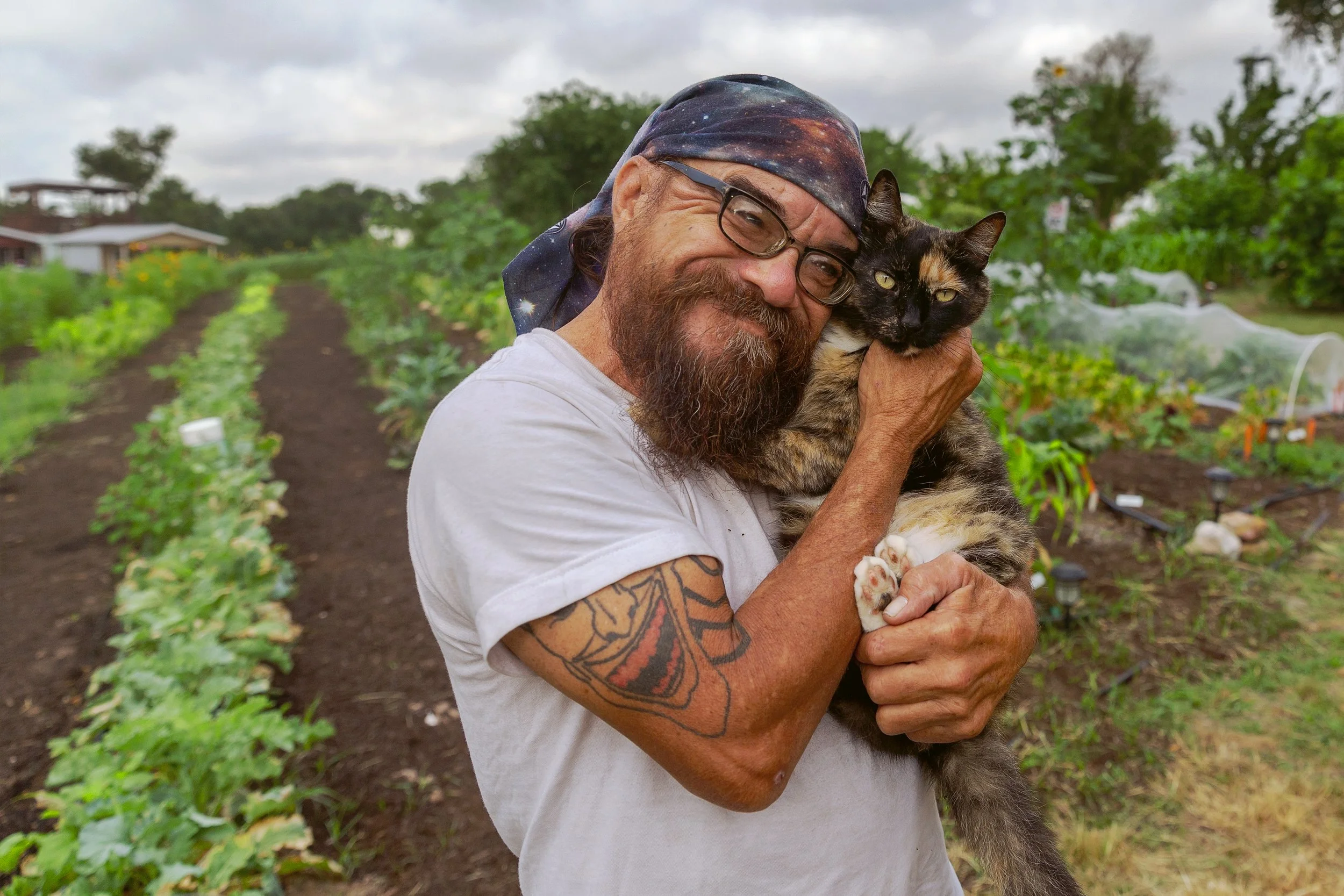
Visiting Mobile Loaves and Fishes outside of Austin Texas is an exercise in challenging everything you think about how to end homelessness. A sprawling campus of 100 acres of tiny homes, offices, gardens and winding sidewalks and streets; it is love made tangible. My visit there, around 2019, was nothing short of an emotionally moving experience. Very few conversations since then have gone by without me mentioning Mobile Loaves and Fishes; as a testament of genuine change, courageous leadership, and people centered solutions. It was an honor then to have Sarah LeNoir, Assistant Director of Relationships take some time to talk to us about Mobile Loaves and Fishes.
Mobile Loaves & Fishes | Serving Our Homeless Brothers and Sisters
TDK: Thank you for taking the time to be here. Let's start out by introducing yourself and what drew you to this work?
Sarah LeNoir: I am Sarah LeNoir. I'm our Assistant Director of Relationships here at Mobile Loaves and Fishes on the Relationships and Giving team.
Right before the pandemic sometime, I began volunteering at Mobile Loaves and really just came to understand that this was a solution that made sense, it was putting love first and was what I perceived to be Christianity in action. I was raised with a general Christian faith, but nothing as clear as what I experienced at Mobile Loaves.
TDK: As a way of introducing the organization, I want to touch on something you said, “Christianity in action”. Can you use that as a platform to describe what the organization really does?
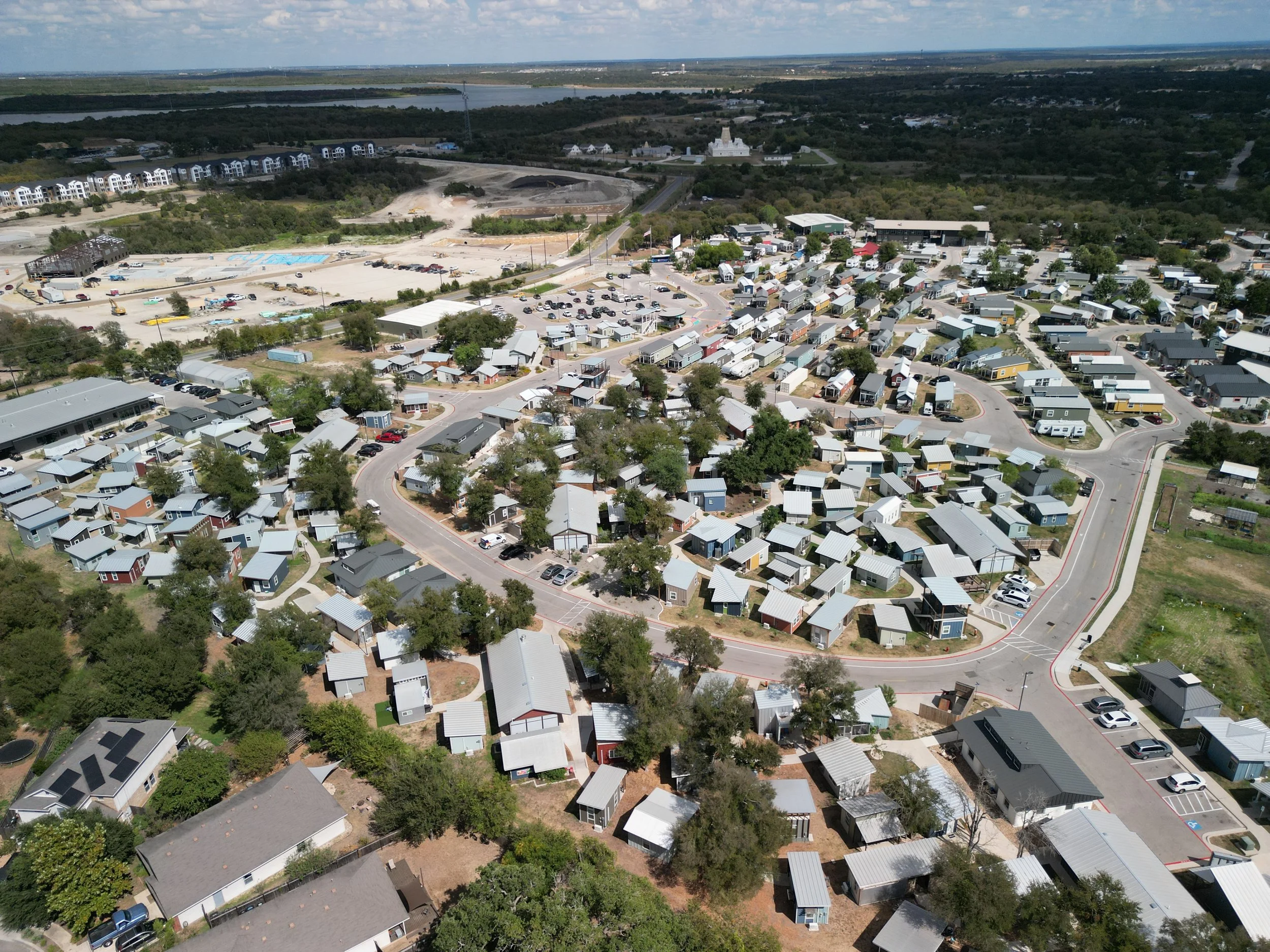
Sarah LeNoir: Yeah, I'll go all the way back to the origins of Mobile Loaves. In 1998, Alan Graham was at a men's retreat at St. John Newman Catholic Church. And the leader of that table was Kevin Shepard, who is now our president, but that's another story. And at that men's retreat, he felt this calling, this pull on his heart, this... this pressure to do something actionable to love his neighbor. So he and some buddies started with a green minivan and just loaded up with some sandwiches and went out to feed their brothers and sisters experiencing homelessness. And that in itself is not incredibly novel. However, it's really the relationships that were built with those early truck runs that kind of just exploded within that congregation as a volunteer opportunity. And then, you know, then came the 501c3 formation, and then it spread to other churches. And here we are all the way to the village.
I have always loved the hymn, They'll Know We're Christians By Our Love. And really, I've always kind of understood the action to be the more important part of faith; not necessarily what you're saying or proclaiming, but how you're treating people.
TDK: That's a beautiful testament. As you know, I've visited the Community First Village, and as I said to you before, it was a moving experience and maybe almost life-changing for me. But I sometimes find it difficult to convey that feeling, to explain why the place invokes such emotion. You're talking about the actionable feeling; how would you describe what it feels like to work and or live there?
Sarah LeNoir: We say all the time that there's really nothing like seeing it. I mean, videos are great, but being able to touch, smell, feel, hear, and walk through the village is wonderful. And anybody that finds themselves in Austin, I hope they can carve out time. We love to do tours.
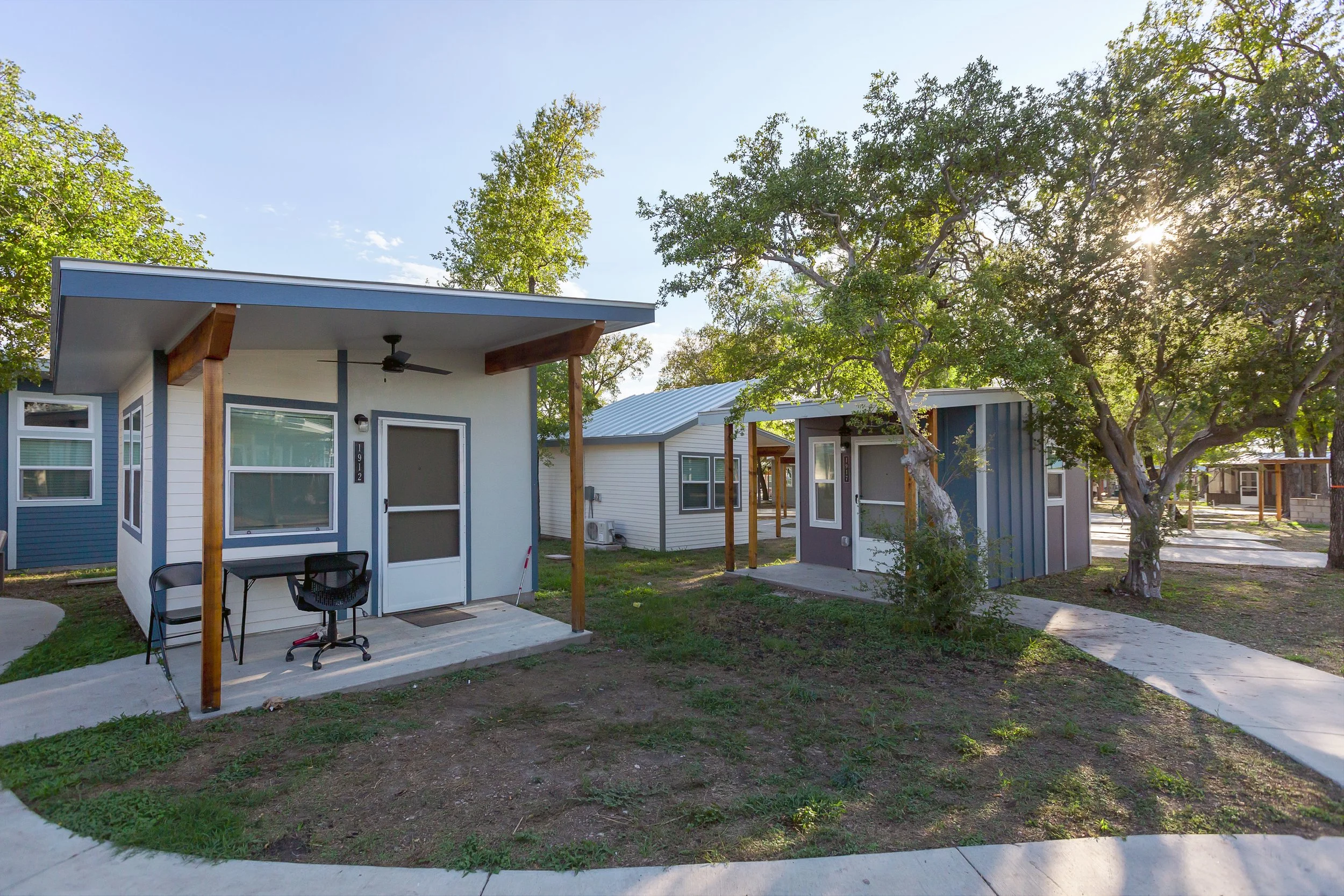
We talk a lot about how grief and joy hold hands here and we are not shy about both of those things. We rejoice in redemption. We rejoice in the goodness that we put into the soil and the fruits that are born. But we also are very open about the trauma that our neighbors have been through and the broken systems that led them here. Our average neighbor spent eight years on the street, and is 57 years old on average. And in Travis County, where we are, the average age of death for someone experiencing chronic homelessness is 48. So our neighbors have already beat the odds. And, you know, we're starting to see that our life expectancy at the Village, at least, is around 60 or 61. We don't sweep anything under the rug here. Like, Alan always says, ‘this is not utopia. We've got a side salad of tension for all the goodness that is going on”.
TDK: I wanted to ask you, too, about one of the missions of the Community First that I found on the website, which I think is really interesting; “empowering the surrounding community into a lifestyle of service with the homeless.” I feel like one of the unexpected benefits of a non-profit is providing volunteer opportunities for people to come into this world and make friends with people that otherwise were just ‘other’.
Sarah LeNoir: That's exactly it. We really believe that relationships are everything. And our hope is that when a volunteer comes to the village, they are starting a relationship or at least engaging in even a temporary relationship with our neighbors. ‘Human to human, heart to heart’ we say that a lot. We truly believe that homelessness is not something that can be fixed by any one fell swoop, one government action, one plan. It requires human beings coming together and working together to do better. So empowering the community into a lifestyle of service with the homeless is really centered on changing hearts and minds or opening hearts and minds. We talk about a halo, which is your circle of influence or your network. And the biggest thing is spreading the word that there is a way to do this through love. And it doesn't have to look the same in every place. But the human first, the community first. Housing alone just can't do it. But the community can.
TDK: And maybe that's a good segue for a question that I was really wanting to ask you about. The ‘community first village’ is very unique. What is your response to the statement, “oh, that would never work here?”
Sarah LeNoir: We fully get that our version may not be something that can be replicated identically. But our relational and people first methodology is a catalyst to challenging the status quo anywhere. So going back to opening hearts and minds to something different is really the first step to mitigating homelessness in this way. What loving your neighbor looks like in Austin, might be different than how it looks in other parts of the country, but we think the foundation of creating community is the starting point. We have a replication team that helps steward organizations who are trying to take this philosophy and apply it to their own community. We have a symposium a couple times a year called the Symposium for Goodness' Sake. We’re here also to answer questions and help you through it and make it work in your community.
TDK: What are some challenges or big projects that Mobile Loaves and Fishes is looking at this year? And maybe you can segue into sort of other ways that people in Chattanooga or anywhere in the world might be able to help out.
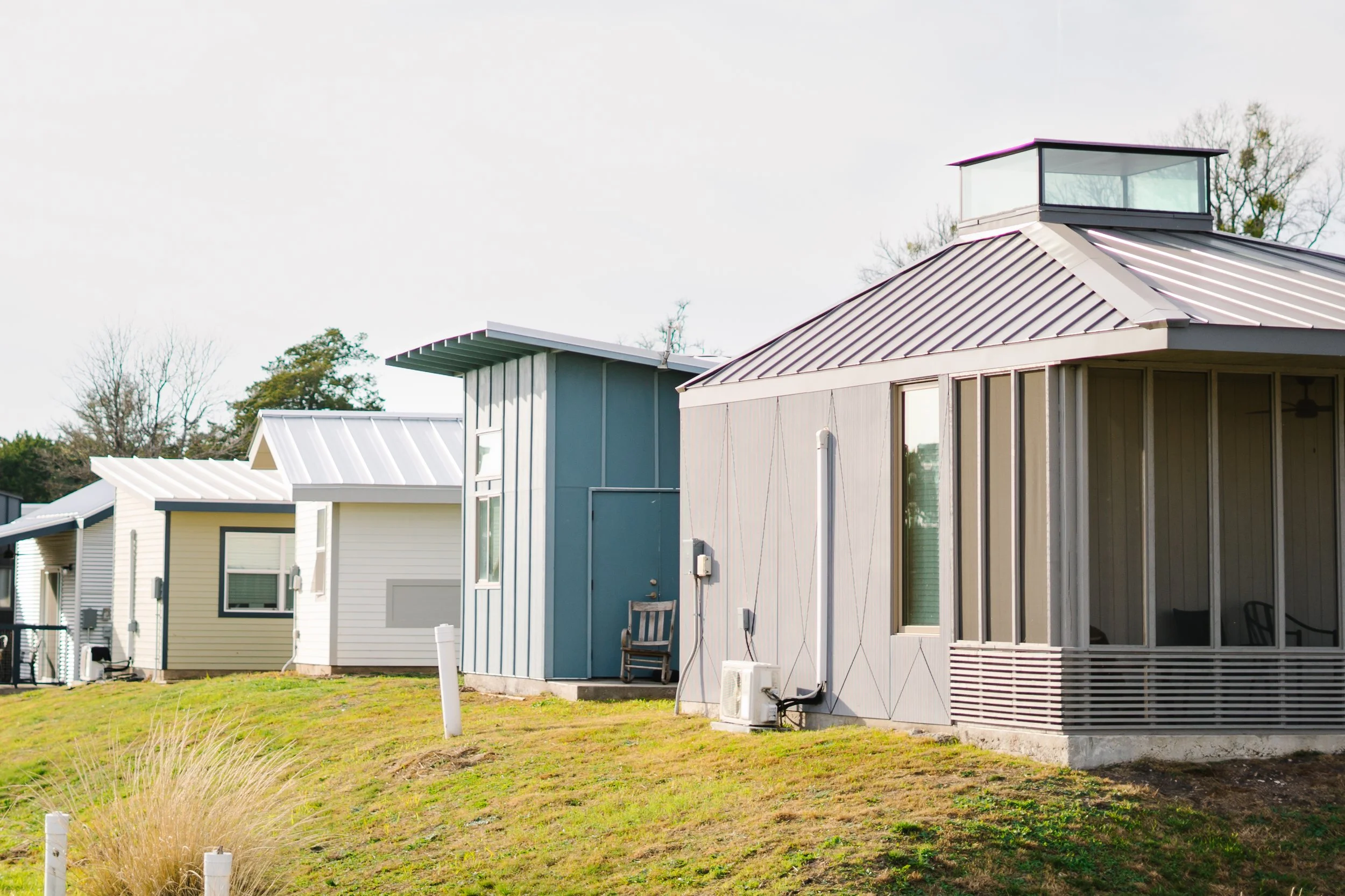
Sarah LeNoir: So one of the exciting challenges is addressing scalability. So the original Village, Phases 1 and 2, or Hog Eye South, as we've now called it, is 51 acres, about 500 homes on that phase, fully built out and smooth sailing. Now, where I'm talking to you from right now is Hog Eye North, our expansion. So that's an additional 51 acres. We've got about 100 homes ready to go on this phase. We're moving in neighbors officially now. We moved into our headquarters building late last year. And so now it's at 500 homes, everybody kind of knows everybody. But when we're done with this expansion, and by the way, there's another 76 acres on Burleson Road by the airport of Austin, which is going to have 1,800 mobile loaves and fishes homes, plus 100 units through a partnership with Foundation Communities, which is an apartment-style affordable housing. And we're kind of doing a joint partnership on that phase, which is really exciting. So really when we're at 1,900 people in six or eight years, how do we scale community? How do you make sure that intimate human-to-human heart-to-heart connection is staying? We have a program or a kind of ideology called the Neighborhood of Knowingness. Sarah Satterley, our Senior Director of Site Operations, who’s been with mobile loaves for a long time and actually lived here for five years, coined that phrase. And so instead of just general pockets of all the houses like maybe we started off with, now we have these intentional groupings of 40 to 50 homes where the kind of community laundry, shower, kitchen amenities are in the middle, and then the micro-homes that don't have plumbing, are right around that, and then the PMRVs which do have plumbing are kind of around that facing inward to each other so that we can ensure that your group of 40 or 50 can have a micro community within the larger village.
TDK: Do you allow pets?
Sarah LeNoir: We do, yeah!. Everybody can have two pets, kind of similar to what any apartment complex might have. We have partners in the veterinary space that will come out and do low-cost or free vaccines, food drives or passing out leashes.
And if I may, jumping back to that empowering communities; we're really good at building communities and housing our neighbors, but we depend on partners to come to do their work in our space. So we have a clinic on site that is run by a partner. We have case management on site. We have behavioral health on site. We have the Central Texas Food Bank partnership that comes out with a mobile “Farmacy”. It's a small grocery store in a trailer that neighbors sign up for and can go shop in once a week. We have barber students or hospitality students that come out and do haircuts. It depends on everybody coming to contribute their own goodness, right? We can't do everything ourselves. We have to rely on each other.
TDK: I just feel so inspired by y'all's work. I don't really know what to say about it other than that. I just feel like it's a beautiful, tangible philosophy in action and it's a much needed model for our world.
Sarah LeNoir: Well, if you are curious Alan's got a podcast called “Gospel Con Carne” where he talks to our neighbors and we go deeper into their stories and testimonies. We also do a direct mail that coincides with a video on our website as well, focusing on a neighbor each time. So lots of ways to keep the channel open.